



Flint advises international businesses and investors on policy, politics, regulation and competition.
Flint advises international businesses and investors on policy, politics, regulation and competition.
Quick links
Sectors
Follow Us


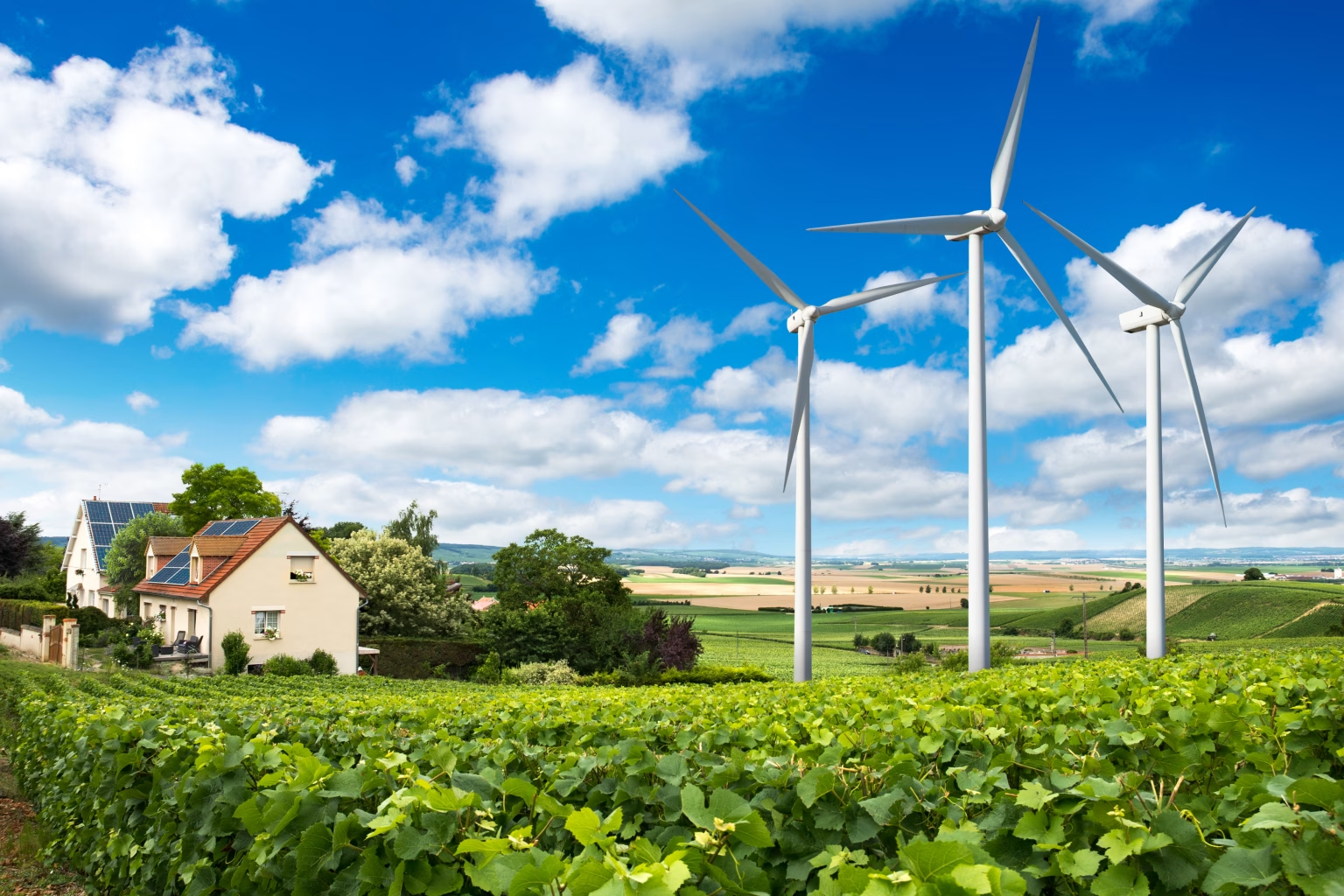
When it comes to climate & energy policy, France is often reduced to nuclear. True, nuclear power is a strategic issue in l’Hexagone. No later than last week, MPs from all across the political spectrum adopted a bill aiming to boost the construction of new nuclear reactors. This does not mean that France does not have ambitious renewables development goals. A bill was adopted in March to make it easier to deploy renewable energy plants, and the country’s Strategy on Energy and Climate, providing for everything from renewable and low-carbon energy targets to industry decarbonation and adaptation to climate change, will be fully revised in the next 12 months.
This busy policy agenda is not only motivated by a selfless will to decarbonate the economy. The government sees the environmental transition as a key driver for growth and hopes to relocate strategic industries in France in the process. A Green Industry Bill, presented by the Government as a French response to the IRA, will thus be discussed in Parliament in June.
All these legislative and regulatory changes create risks and opportunities for businesses. In this blog post, we explore the key components of France’s energy and climate policy and how they will impact economic operators.
It is no secret that complete industrial and infrastructure projects, particularly in the energy sector, take time in France. Permitting time exceeds 70 months for wind and nears 40 months for solar, way above the EU limit of 24 months. To meet its soon to be revised decarbonisation and energy targets, the government needs to reduce both delays and uncertainty for investors and project holders uncertainty for investors and project holders. To that end, two “Acceleration Acts” were adopted in H1 2023. One covering renewables, the other covering nuclear. Both laws provide for simplified and quicker applications and permitting processes, while regulating appeal rights against specific energy infrastructure projects.
The two acts are expected to bring positive changes for energy companies and investors. However, the devil is in the detail. Close to 70 décrets (i.e. governmental orders) providing for both laws’ implementation are to be published in the months to come, creating uncertainty on their exact impact on red tape, costs and delays.
The two Acceleration Acts are supposed to help meet the targets laid out in the upcoming French Strategy on Energy and Climate (SFEC), made up of one bill and two regulations.
The 5-year Energy & Climate Planning Bill (LPEC) will define France's energy and climate priorities over the period 2028-2033, taking into account the European objective of reducing net greenhouse gas emissions to -55% by 2030. Expected to be tabled in Parliament in Q4 2023, it will set out objectives in terms of GHG emissions reduction targets, energy consumption reduction, renewable and low-carbon energy development, electricity mix diversification and energy efficiency.
The details of how to meet these objectives will be set out operationally in the 3rd Multiyear Energy Plan (PPE 2024-2033, providing for France’s energy mix), and the 3rd National Low-Carbon Strategy (SNBC 3, detailing France’s path to Net Zero), of which draft versions will be published and opened to consultation this summer.
On 16 May, the government published its long-awaited Green Industry Bill, which Parliament should start discussing in June.
Far from being just about decarbonisation, the Green Industry Bill is an attempt to relocate strategic industrial activities to France, which is one of the European countries that has suffered the most from deindustrialization in the last 40 years. The bill must be understood as a response to the US Inflation Reduction Act (IRA), complementing the EU’s Net Zero Industry Act (NZIA). It reflects fears in Paris that France will miss out on major investment opportunities if there is no reaction to Washington’s protectionist policies.
The Green Industry Bill includes tax breaks to support both manufacturing in strategic sectors and investments in decarbonisation, measures to channel savings toward the development and production of green technologies and look at ways to make it quicker (the aim is to decrease permitting time from 17 to 9 months) to open industrial sites in France by cutting red tape and proactively identifying available lands.
Lacking an absolute majority in Parliament, the government faces a difficult path ahead. Passing the LPEC, which is due to be discussed by MPs alongside next years’ Budget Bill, will be a challenge. The Green Industry Bill, which Senators will start debating in a few weeks, will be a test of the government’s ability to strike deals with the opposition on industrial and environmental policies.
One thing is certain. Businesses will be impacted at many levels by the revamp of France’s energy and climate policy.
There will be opportunities. The Green Industry bill will provide new funding channels for businesses (tax breaks, new saving account aiming to finance green industries). All in all, €5.6 billion in public funding have been allocated to decarbonisation of industrial sites and up €9 billion to support renewable and low-carbon hydrogen projects. The more ambitious energy targets laid out in the upcoming PPE, as well as the simplification measures provided for by the Renewables Acceleration Act, are likely to give a boost to the number of renewable energy projects in France.
There will be risks and new obligations, too. The upcoming SNBC is likely to increase GhG emissions reduction targets, paving the way for more stringent decarbonisation roadmaps for companies operating in France, particularly in the industrial sector. New public tenders rules will favor bidders abiding by high environmental standards. Tax increases on polluting activities have been announced to finance tax breaks on green technologies – the next Budget Bill should provide further clarity on this point. Last but not least, the décrets implementing the Renewables and Nuclear Acceleration Acts will need to be closely monitored, as they will determine whether the promises of administrative simplification and reduction in the time required to launch infrastructure and industrial projects are kept.
For energy companies and investors operating in France, it is time to start paying attention.
Quentin Duthilleul is a Director based in Paris. His expertise is in French and European policy, and he has experience advising clients in the energy and climate sectors on French political and media engagement. Anne-Juliette Rohrbach leads Flint’s Paris office. She is an expert in French policy and regulation with 15 years’ experience in public affairs consultancy for a wide range of clients across many sectors. To find out more about how Flint can help you navigate the risks and opportunities of these developments, please get in touch.