






Flint advises international businesses and investors on policy, politics, regulation and competition.
Flint advises international businesses and investors on policy, politics, regulation and competition.
Quick links
Sectors
Follow Us


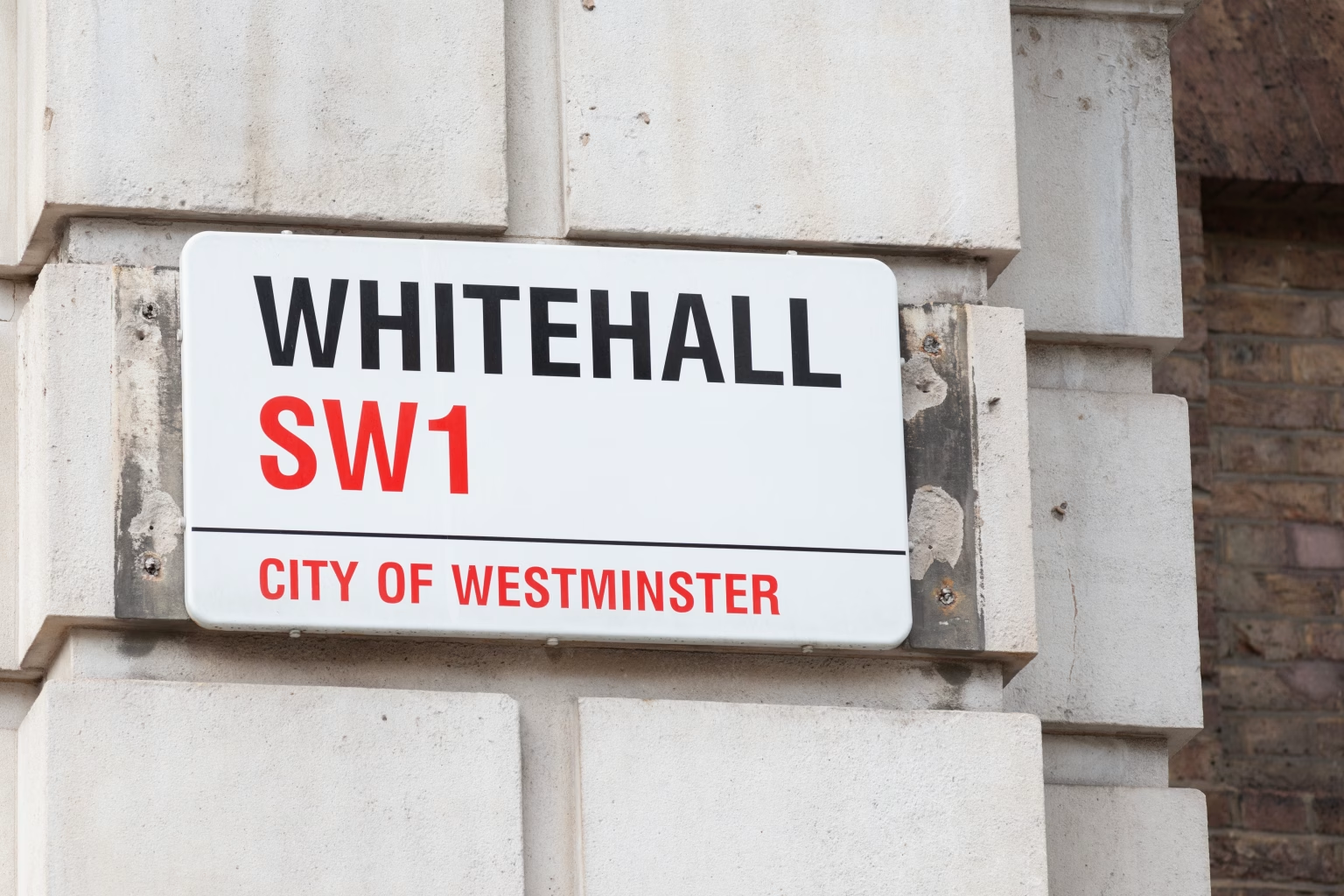
The transfer of the ISU into BIST under Jonathan Reynolds puts the UK's investment screening regime at the centre of the Government's industrial strategy, where foreign investment, strategic capability and national security are becoming more closely linked.. While the NSIA's legal framework remains unchanged, the shift likely increases the importance of demonstrating how transactions support the UK's wider industrial, economic security and strategic capability objectives.
The UK’s National Security and Investment Act (NSIA) regime has always sat at the intersection of prosperity and security policy. Andy Burnham’s decision to move the team that oversees it from the Cabinet Office to the Department for Business, Innovation, Science and Trade (BIST) could shift the balance between these competing tensions in a meaningful way.
The previous home of the Investment Security Unit (ISU), the Cabinet Office, brought together the UK’s national security expertise. Its new home, BIST, focuses on business, trade, innovation and science. This means the ISU is moving into a department whose mission is not only to attract investment, but to shape what kind of growth the UK wants.
National security departments and agencies will still feed into relevant cases and the statutory test has not changed but relevant sector officials may have more direct influence on how issues are framed. That could make the economic case for accepting capital more visible in difficult cases, particularly where transaction parties are able to clearly articulate a narrative around investment, job creation, and R&D.
Balancing against this shift in emphasis, however, is the new Prime Minister’s reindustrialisation rhetoric and emphasis on devolving economic decision-making from London. This is likely to make ministers more sensitive to whether transactions support or weaken domestic capability, regional industrial bases and employment, and strategically important functions.
The new Prime Minister has put Jonathan Reynolds, architect of Labour’s industrial strategy, in charge of BIST. As Secretary of State for the department, he will be decision maker on NSIA cases. While the quasi-judicial nature of his role constrains him, it does not eliminate discretion. Critically, national security is not defined in the UK regime, giving wide political latitude for interpretation. Rare cases of judicial review on NSIA cases have also made clear the courts will not second guess national security judgements.
Reynolds’ politics are broadly moderate and business-facing. Hs biggest achievement during his last stint in Government as Business Secretary was the development of Labour’s Industrial Strategy, a strategy deliberately framed as business-friendly i.e. not old-fashioned style subsidy and direction, but a set of sector-focused and horizontal levers around skills, regulation, R&D, technology adoption, data, planning and access to finance. He is likely to understand the importance of private capital, but also to be highly attuned to arguments about strategic sectors, supply-chain resilience and the long-term location of UK capability.
Junior ministerial portfolios will also matter as some NSIA responsibilities may be delegated once the department settles its internal responsibilities. The tension now sitting inside BIST between attracting investment, supporting industrial strategy, scaling emerging technology, and managing security risk is likely to be reflected in ministerial briefs and, over time, in casework.
If Anas Sarwar as Trade Minister is given responsibility for investment security, his brief may shape how that balance is approached. Other BIST ministers, including Kanishka Narayan, may also influence sensitive technology cases involving AI, semiconductors or advanced manufacturing. Narayan's wider views on industrial strategy are also likely to shape the department’s thinking and feed into Reynolds’ approach.
The harder cases will be those where both sides of the equation are real: the UK wants the investment but also has concerns about what comes with it. A transaction may support growth, jobs or infrastructure while also raising questions about control over sensitive assets, dependence on overseas owners, access to important technology or the possible movement of key capability out of the UK.
The administration has already started to signal how it sees this balance. In the first week of the new administration, Kanishka Narayan, the new AI minister and the first UK AI minister to attend Cabinet, welcomed foreign investment but attached an important caveat: the UK needs to retain the economic value, strategic value and jobs generated by its most promising companies.
The concern is broader than hostile-state investment. Narayan’s comments on semiconductors and AI chips point to a concern that UK emerging technology businesses may be bought or supported by overseas players, including from allied jurisdictions, before they can scale in the UK. That takes the debate beyond traditional national security risk and into questions of industrial capability, sovereignty and who captures the value from British innovation.
Decisions on the hardest cases will continue to be shaped by the centre of government. The Prime Minister and new Chancellor John Healey are likely to take a close interest in politically exposed transactions, especially where they intersect with the new national security architecture, fiscal priorities, regional growth commitments or the UK’s changing relationship with key allies. The overall effect is unlikely to be a simple shift towards either liberalisation or interventionism. Rather, it is likely to produce a more policy-rich NSIA environment, in which investors need to show not only that security risks can be mitigated, but that the transaction supports the UK’s broader economic security, industrial, regional and strategic capability objectives.
Flint helps clients navigate the intersection of politics, regulation, competition and economic security. We support investors and companies in assessing NSIA risk, preparing evidence, developing mitigation strategies and engaging effectively with Government.
If you would like to discuss any of these issues further please get in touch with our experts.